Mouth taping is the practice of placing a small strip of adhesive tape over the lips before sleep. The goal, according to those who practice it, is to keep the mouth closed during the night and encourage breathing through the nose.
The practice has gained widespread attention since around 2022, driven largely by social media and a growing public interest in sleep optimization. On TikTok alone, the hashtag #mouthtaping has accumulated over 200 million views.
But what does the published research actually say? And what do medical institutions think about it?
Where mouth taping came from
Mouth taping did not originate on social media. Its roots trace back to the Buteyko breathing method, developed by Ukrainian physician Konstantin Buteyko in the 1950s. Buteyko practitioners have long recommended taping the mouth during sleep as a way to retrain breathing patterns, particularly for people with asthma. Patrick McKeown, a prominent Buteyko educator, published guidance on the practice in his 2004 book Close Your Mouth.
The practice reached a much wider audience in 2020 when journalist James Nestor published Breath: The New Science of a Lost Art. In the book, Nestor describes a personal experiment conducted at Stanford University in which he blocked his nasal passages for 10 days and breathed exclusively through his mouth. He reported that his sleep apnea events increased roughly fourfold during that period. The book spent months on bestseller lists and introduced millions of readers to the idea that how we breathe matters as much as how we eat or exercise.
From there, the practice moved to TikTok and Instagram, where creators began posting videos of themselves taping their mouths before bed. Some claimed improvements in snoring, sleep quality, energy levels, and even facial appearance.
What proponents say about it
People who practice mouth taping generally point to the benefits of nasal breathing over mouth breathing. The core argument:
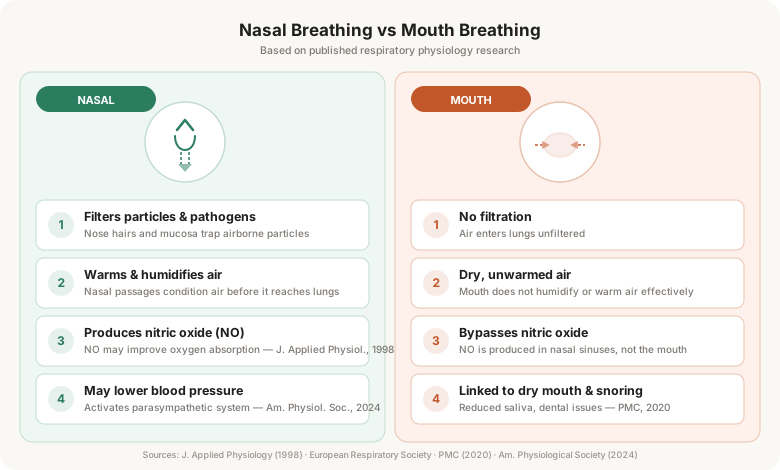
- The nose warms, humidifies, and filters air before it reaches the lungs. The mouth does not.
- Nasal breathing produces nitric oxide (NO) in the paranasal sinuses. According to a 1998 study published in the Journal of Applied Physiology, nasally produced NO dilates blood vessels in the lungs and may improve oxygen transfer to the bloodstream.
- Mouth breathing during sleep has been associated in some studies with dry mouth, snoring, and disrupted sleep.
Proponents argue that taping the mouth simply ensures that the sleeper breathes nasally throughout the night, capturing these benefits.
What published research says
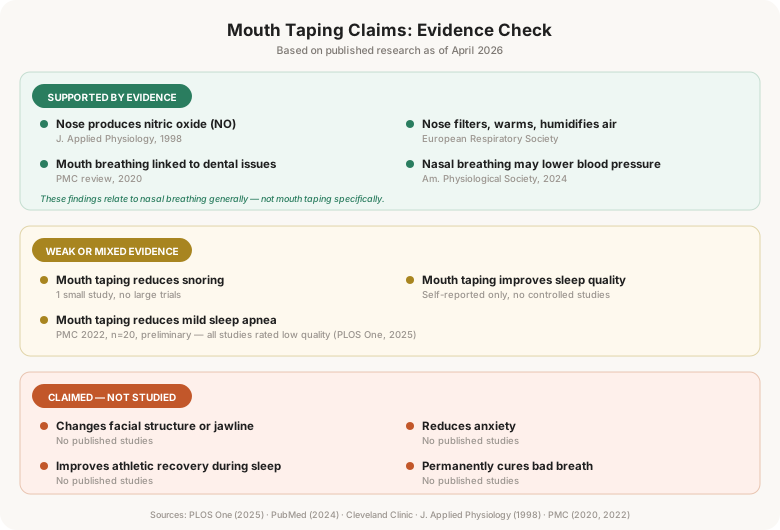
The scientific evidence on mouth taping specifically — as opposed to nasal breathing in general — is limited.
A 2025 systematic review published in PLOS One examined the available literature on mouth taping in patients with mouth breathing, sleep-disordered breathing, or obstructive sleep apnea. The review identified 10 studies covering a total of 213 patients. The findings:
- Some studies reported limited benefits for people with mild sleep apnea.
- All 10 studies were rated as low quality by the reviewers.
- The authors noted that forced mouth closure could potentially worsen airway collapse in certain individuals.
A separate 2024 scoping review published in PubMed found that only 9 out of 177 identified studies met inclusion criteria for analysis. The review concluded that most claims circulating on social media about mouth taping are not currently supported by the published literature.
One earlier preliminary study from 2022, published in PMC, tested mouth taping on 20 mouth-breathers with mild obstructive sleep apnea. Some participants showed a reduction in their apnea-hypopnea index (AHI), but the sample size was small and the authors themselves described the results as preliminary.
In short: a handful of small, low-quality studies exist. None of them provide strong evidence for or against mouth taping. Larger, well-designed clinical trials have not yet been conducted.
What medical institutions say
Several major medical institutions have issued statements about mouth taping:
Cleveland Clinic states that mouth taping is “not recommended” as a treatment for sleep issues. Their published guidance notes risks including skin irritation, anxiety during sleep, and breathing difficulty. They advise consulting a doctor before trying it.
The American Dental Association (ADA) has flagged safety concerns about the viral trend, noting that mouth taping is contraindicated for people with sleep apnea, nasal obstruction, or other breathing difficulties.
The Sleep Foundation describes the clinical evidence as “limited” and notes that the small studies that do exist have shown mixed results. They do not recommend mouth taping for people with obstructive sleep apnea or airway issues.
Documented risks and contraindications
Based on published medical sources, the following risks and contraindications have been documented:
Risks:
- Skin irritation or contact dermatitis from adhesive
- Anxiety or panic during sleep, particularly in people new to the practice
- Breathing difficulty if nasal passages become blocked during the night
- Aspiration risk if vomiting occurs while the mouth is taped
- Potential for worsened airway collapse in people with certain anatomical features
Contraindications cited by medical sources:
- Obstructive sleep apnea (moderate to severe)
- Chronic nasal congestion or obstruction
- Deviated septum or other nasal structural issues
- Gastroesophageal reflux disease (GERD)
- Asthma or other respiratory conditions
- Any condition that may cause nasal blockage during sleep
The gap between interest and evidence
Mouth taping sits in an unusual position. Public interest is very high — millions of people have tried it or are considering it. But the published evidence remains thin. The most comprehensive review to date (PLOS One, 2025) explicitly calls for larger, higher-quality studies before any clinical conclusions can be drawn.
This does not mean mouth taping is necessarily harmful or ineffective. It means the research has not yet caught up with the popularity.
For anyone considering mouth taping, medical sources consistently suggest one thing: talk to a healthcare professional first, particularly if you have any history of breathing difficulties, sleep apnea, or nasal obstruction.
This page is for informational purposes only. It does not constitute medical advice. Consult a healthcare professional before trying mouth taping or making changes to your sleep routine.
Sources
- PLOS One — Breaking social media fads: systematic review of mouth taping (2025)
- PubMed — Nocturnal mouth-taping and social media: a scoping review (2024)
- PMC — The Impact of Mouth-Taping in Mouth-Breathers with Mild OSA (2022)
- Cleveland Clinic — Is Mouth Tape Safe To Use While Sleeping?
- American Dental Association — Safety of social media mouth taping trend
- Journal of Applied Physiology — Nasal nitric oxide and oxygen transfer (1998)
- James Nestor — Breath: The New Science of a Lost Art (2020)
- Sleep Foundation — Mouth Taping for Sleep: Does It Work?
Frequently Asked Questions
What is mouth taping and where did it come from?
Mouth taping is the practice of placing a small strip of adhesive tape over the lips before sleep to encourage nasal breathing. Its roots trace back to the Buteyko breathing method developed in the 1950s, and it gained widespread attention after 2022 with over 200 million views on TikTok.
What do medical institutions say about mouth taping?
Cleveland Clinic states mouth taping is not recommended and notes risks including skin irritation, anxiety, and breathing difficulty. The American Dental Association has flagged safety concerns and noted it is contraindicated for people with sleep apnea, nasal obstruction, or breathing difficulties.
Who should not try mouth taping?
Medical sources have identified contraindications including moderate to severe obstructive sleep apnea, chronic nasal congestion or obstruction, deviated septum, gastroesophageal reflux disease, asthma, and any condition that may cause nasal blockage during sleep.