Skin irritation from mouth tape is one of the more common complaints among people who try it. The reactions range from barely noticeable redness that fades within an hour to persistent rashes, peeling, and itching that last for days. Understanding what causes these reactions — and which adhesive types are more likely to trigger them — can help explain why some products cause problems while others don’t.
Types of Reactions
Skin reactions to adhesive products generally fall into a few categories, according to the Cleveland Clinic’s dermatology resources.
Irritant Contact Dermatitis
This is the most common reaction to adhesive tape. It doesn’t involve an immune response — instead, the adhesive or the mechanical action of applying and removing tape damages the outer skin layer directly. Symptoms include redness, mild burning or stinging, and skin that looks raw or slightly abraded.
Irritant contact dermatitis is often cumulative. The first night of mouth taping might produce no visible reaction. After several nights in a row, the skin doesn’t fully recover between applications, and redness builds. Some users describe a cycle where the skin looks fine in the evening but is noticeably red and tender by morning, with each night adding to the damage.
The facial skin around the mouth is thinner than skin on most other body areas, which makes it more susceptible to this kind of mechanical irritation. Repeated tape application and removal acts as a mild form of skin stripping — each removal takes a microscopic layer of dead skin cells with it.
Allergic Contact Dermatitis
Less common but more persistent, allergic contact dermatitis is an actual immune-mediated response to a chemical component in the adhesive. According to the Cleveland Clinic, this reaction typically appears 12-72 hours after exposure and can include itching, swelling, blistering, and a rash that extends slightly beyond the area where the tape made contact.
The delayed onset is what distinguishes it from simple irritation. Someone might wear mouth tape without issues for the first two nights, then wake up on the third morning with an itchy rash — not because the third night’s exposure was different, but because the immune system needed time to mount a response after sensitization.
Once sensitized to a specific adhesive chemical, the reaction tends to occur faster and more severely with subsequent exposures. WebMD notes that adhesive allergies, once developed, are typically permanent — the immune system does not “forget” the sensitization.
Mechanical Irritation
Separate from chemical reactions, the physical act of peeling tape off skin causes mechanical stress. Pulling tape quickly or at a sharp angle can tear surface skin cells. Around the mouth, where skin is thin and often slightly moist, this can leave visible redness and tenderness.
People with dry skin, eczema, or rosacea around the mouth area report higher rates of mechanical irritation from mouth tape, as their skin barrier is already compromised.
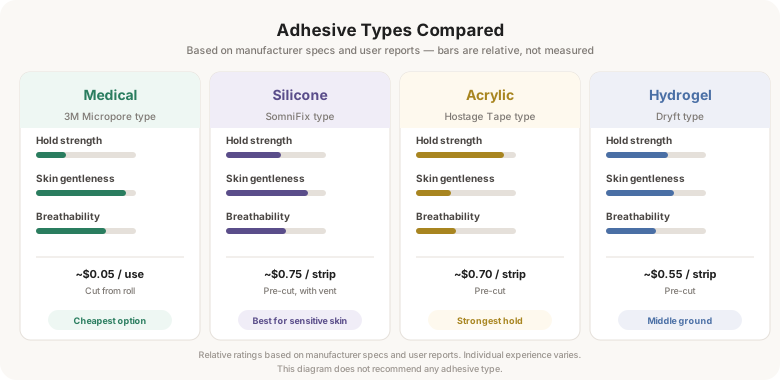
Adhesive Types and Sensitivity
Not all adhesives carry the same risk profile. The type of adhesive used in a mouth tape product is often the single biggest factor in whether it causes a reaction.
Acrylic-Based Adhesives
Acrylic adhesives are the most common type used in medical tapes and many consumer mouth tape products. They are effective, inexpensive, and bond well in the presence of moisture. They are also the most frequently cited cause of adhesive-related contact dermatitis, according to dermatological literature.
The specific chemicals that trigger reactions vary — acrylate monomers, cross-linking agents, and tackifying resins can all act as sensitizers. Because acrylic adhesive formulations differ between manufacturers, a person might react to one acrylic-based tape but tolerate another. This inconsistency can make identifying the problem frustrating.
Silicone-Based Adhesives
Silicone adhesives are widely considered the gentlest option for skin contact. They bond through a different mechanism than acrylic adhesives — relying on surface contact rather than chemical tack — and they release more easily without stripping skin cells.
Medical products designed for sensitive or fragile skin (such as scar sheets and wound dressings for elderly patients) frequently use silicone adhesive. Some premium mouth tape brands have adopted silicone adhesive specifically to reduce skin reactions.
The tradeoff is that silicone adhesives are less aggressive. They may not hold as reliably for people who move a lot during sleep, who have oily skin, or who have facial hair that reduces the contact area. They also cost more to manufacture, which is reflected in product pricing.
Zinc Oxide-Based Adhesives
Found in some athletic and surgical tapes, zinc oxide adhesives sit between acrylic and silicone in terms of both adhesion strength and skin friendliness. They are less likely to cause allergic reactions than acrylic adhesives but can still cause irritant dermatitis with prolonged or repeated use. Some users of traditional surgical tape for DIY mouth taping encounter zinc oxide adhesives.
Rubber-Based Adhesives
Rubber (natural latex) adhesives are aggressive and strongly associated with allergic reactions. They are uncommon in products marketed for mouth taping but can appear in general-purpose tapes that people repurpose for the task. Anyone with a known latex allergy needs to verify that their chosen tape is latex-free.
The Patch Test Approach
Dermatological sources, including the American Academy of Dermatology, describe patch testing as the standard method for identifying adhesive sensitivities. In a clinical setting, this involves applying small amounts of suspected allergens to the skin under occlusion for 48 hours, then reading the results.
Users in mouth taping communities describe an informal version of this process: applying a small piece of the tape to the inner forearm or behind the ear for a night before using it on the face. If redness, itching, or a rash develops at the test site, they avoid using that product on the more sensitive facial skin.
This informal approach has limitations — the forearm skin is thicker and less reactive than facial skin, so a negative test on the arm does not guarantee the face will tolerate the same tape. But a positive reaction on the arm is a reliable signal that the facial skin will almost certainly react as well.
Reducing the Risk
Users who experience mild reactions but still wish to continue mouth taping describe several strategies:
Rotating tape placement. Rather than applying tape to the exact same skin area every night, some users alternate placement slightly — a centimeter higher one night, a centimeter lower the next — to give each patch of skin a recovery night.
Applying a barrier. Some users apply a thin layer of petroleum jelly or a skin barrier wipe to the taping area before applying the tape. This reduces direct adhesive-to-skin contact. The tradeoff is reduced adhesion — the tape may not hold as well through the night.
Switching adhesive types. Moving from an acrylic-based product to a silicone-based one resolves the problem for some users. Different products use different adhesive types — silicone-based adhesives are generally considered gentler on skin than acrylic-based ones.
Reducing removal force. Peeling tape slowly, parallel to the skin surface rather than perpendicular to it, reduces mechanical skin damage. Some users dampen the tape with water before removal to soften the adhesive.
When Reactions Signal a Larger Problem
Most tape-related skin reactions are mild and resolve within hours of tape removal. According to dermatological sources, reactions that warrant medical attention include blistering, spreading rash beyond the tape area, persistent itching lasting more than 24 hours after removal, or broken skin that shows signs of infection (increasing redness, warmth, swelling, or discharge).
Persistent perioral dermatitis — a rash specifically affecting the area around the mouth — can sometimes be triggered or worsened by occlusive products including tape. This condition has its own treatment pathway and can become chronic if the triggering exposure continues.
The safety guide covers broader risk considerations for mouth taping beyond skin reactions.
Consult a healthcare professional before trying mouth taping.
Sources
Frequently Asked Questions
What types of skin reactions can mouth tape cause?
Irritant contact dermatitis, the most common reaction, causes redness and raw appearance from direct skin damage without immune involvement. Allergic contact dermatitis is less common but more persistent, typically appearing 12-72 hours after exposure with itching, swelling, and blistering extending beyond the tape area.
Which adhesive types cause the most skin reactions?
Acrylic-based adhesives are the most frequently cited cause of adhesive-related contact dermatitis. Silicone-based adhesives are considered the gentlest option. Rubber-based adhesives are aggressive and strongly associated with allergic reactions, particularly in people with latex allergies.
How can skin reactions from mouth tape be reduced?
Users describe rotating tape placement to give skin recovery nights, applying petroleum jelly or barrier wipes before taping, switching from acrylic to silicone-based adhesives, and peeling tape slowly parallel to the skin surface rather than perpendicular.